


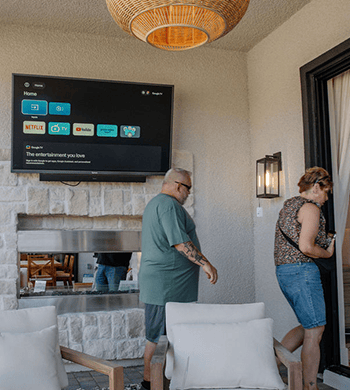

The most common mistake in backyard outdoor TV placement is pointing the screen at the dining table. Dining is a background-viewing activity — people glance at the screen between conversations and courses — while lounge seating is where they settle in and actually watch. In most backyards, the lounge should win. Then match the screen’s brightness to how much sun that specific wall takes. A Sylvox outdoor TV can work in different backyard zones, but the best placement still starts with viewing habits, shade, and glare.
This guide covers the four things worth checking before you drill: who actually watches, where the sightlines land, how people move through the space, and how much sun hits the wall.
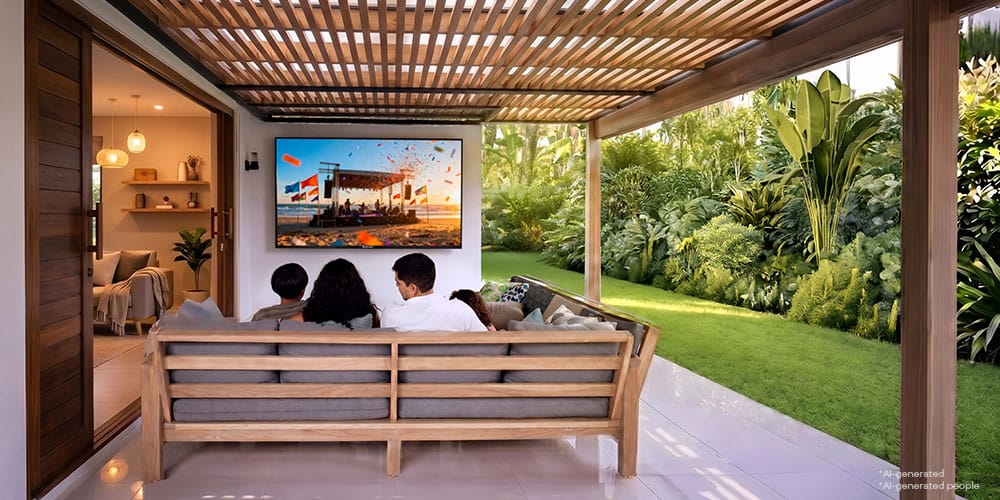
Assessing Your Primary Viewing Audience and Usage Frequency
Before any mounting bracket goes up, answer one question: when people gather in your backyard, are they primarily eating, or relaxing and watching?
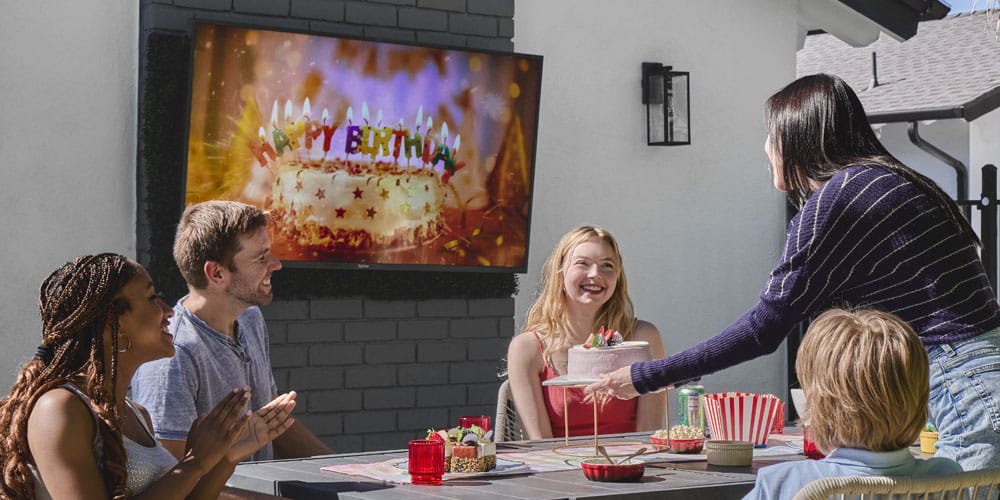
Dining-oriented backyards — where the table hosts weekend barbecues and family dinners — treat the TV as secondary. People glance at it between conversations, or while waiting for food to come off the grill. Attention is fragmented, and nobody sits still for a full game.
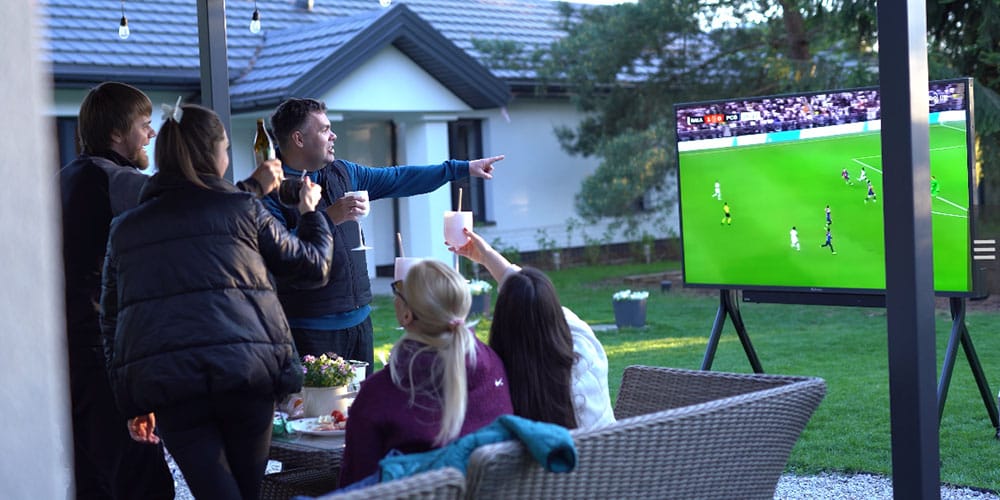
Lounge-oriented backyards — deep seating, a fire pit, a sectional facing one direction — treat the TV as the centerpiece. Lounge viewing usually lasts longer—a full game, a movie, or several episodes can easily keep people seated for hours. That calls for a front-and-center position and enough brightness to hold detail during daytime viewing.
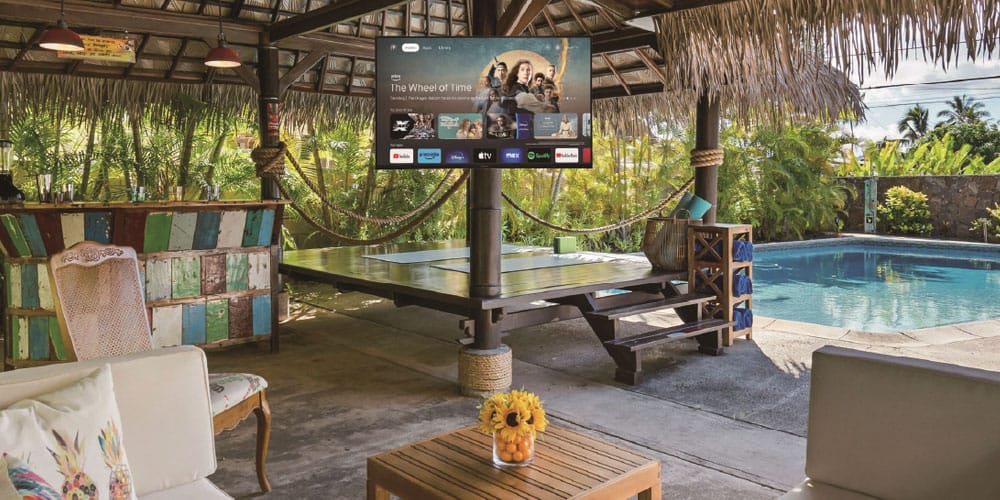
Usage frequency follows the same logic. A screen that runs every summer evening justifies more care in placement than one used a few times a season. Watch where people actually drift after dinner for a couple of weeks, and where they settle when a game is on. That pattern is a better guide than how the furniture happens to be arranged today.
Understanding Sightlines from Dining and Lounge Areas
Sightlines come down to two things. First, the middle of the screen should be at about eye level when you're seated. Second, everyone should be sitting roughly in front of the screen rather than off to one side — the further off to the side you sit, the dimmer the picture looks and the more the colors shift.
For dining areas, the TV mounts higher, because diners look up from the table and the screen has to clear centerpieces and serving dishes. Viewing distance is longer too. A 43-inch screen works for a small bistro table; a 65-inch suits a full dining table where guests sit farther back.
For lounge seating, the center height drops to match lower, deeper furniture. People sit closer and stay longer, so the screen should sit at or slightly below seated eye level to avoid neck strain. A 55-inch outdoor TV works well for a typical lounge area, while a 75-inch model is better suited to larger seating areas. A Sylvox outdoor TV gives you room to choose by viewing distance, so the screen feels comfortable instead of oversized or too small for the seating layout.
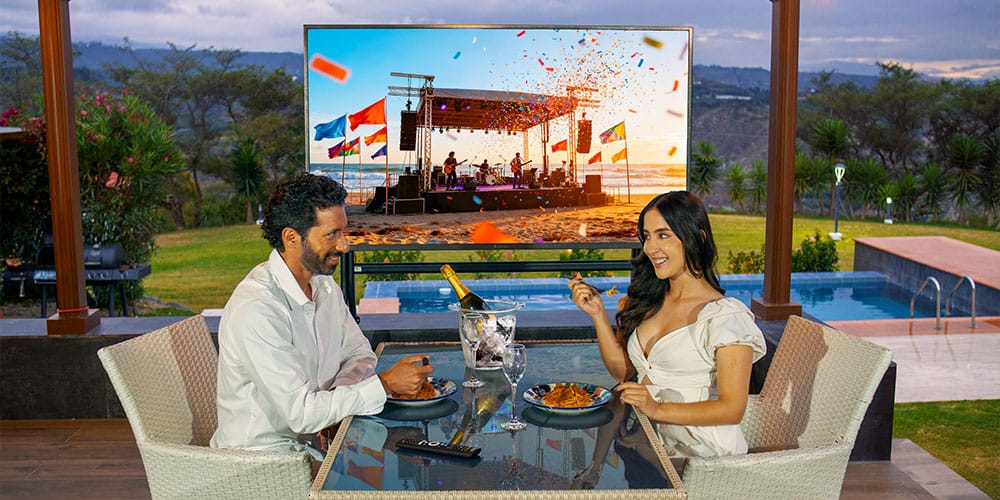
The conflict shows up when one wall faces both zones. A screen set for the dining table sits too high for lounge viewing, and a lounge-height screen makes diners crane their necks. A fixed mount cannot serve both, which is why the primary-zone decision comes first. The right placement also depends on choosing the correct screen size for your space. Check this Outdoor TV Buying Guide for sizing recommendations based on viewing distance and setup needs.
Balancing TV Placement with Traffic Flow and Outdoor Activities
A TV that blocks the path from the kitchen to the grill fails no matter how good the picture is. Walk the routes people actually use before you commit.
Paths to map: kitchen to grill, door to pool, driveway to seating, and wherever kids cut through. Keep the screen out of those lanes, and off any wall that forces people to walk between the seats and the picture. A viewer who has to lean around someone fetching a drink every five minutes will stop using the setup.
Outdoor spaces also bring challenges that indoor TVs aren’t designed to handle. Pool areas expose screens to splashes and chlorinated mist. Grill zones can leave grease and smoke residue on the display, while play areas add the risk of accidental impacts from balls and toys. These everyday conditions are why a purpose-built outdoor TV makes the difference.
For outdoor entertainment areas like these, Sylvox outdoor TVs combine weather-ready protection with long-term durability, featuring IP56-rated sealed housing, a corrosion- and heat-resistant metal body, and reliable performance in temperatures from -22°F to 122°F (-30°C to 50°C).
Considering Sun Exposure and Glare for Each Placement Option
Sun exposure is the variable most homeowners underestimate, and it can make an otherwise perfect spot unwatchable for half the day. Which way the wall faces decides which problem you're solving.
North-facing walls get indirect light all day — the easiest case. East-facing walls get direct morning sun, which throws strong glare across the screen and makes viewing uncomfortable until mid-morning. West-facing walls take the worst of it: direct afternoon and evening sun, arriving right when people want to watch. South-facing walls in the northern hemisphere get sun through most of the day, at an angle that shifts with the season.
Here's the part most placement guides skip: the wall that works best for sightlines is often the wall with the worst sun — and you don't have to accept that trade-off. A Sylvox outdoor TV wall mount extends the screen away from the wall and swivels left and right, so you can angle it off the sun in the afternoon and turn it back toward the lounge after sunset. If you'd rather not commit to one wall at all, a Sylvox rolling floor stand lets you move the screen between the dining area and the lounge and park it wherever the light is best that evening.
Once the position is settled, outdoor TV brightness is the last call:
| Where the TV goes | Light it deals with | Brightness to look for | Sylvox series |
|---|---|---|---|
Covered patio, pergola, or screened porch | Shade most of the day, some reflected light | 1,000 nits | |
Open deck, poolside, or rooftop | Hours of direct sun | 2,000 nits |
Two rules cover most backyards. Put a 1,000-nit outdoor TV where there's a roof over it — a covered patio, a pergola, a screened porch, or a shaded north wall. There, 1,000 nits stays clear against reflected daylight without feeling harsh once the sun drops. Put a 2,000-nit screen where nothing blocks the sun — an open deck, poolside, a rooftop terrace, or a west-facing wall that takes the full afternoon. In these brighter spots, a Sylvox outdoor TV helps keep the picture clear without forcing you to move the whole seating area into deeper shade.
Reflected light deserves its own note. A covered deck next to a pool, pale paving, or a wall of windows sits in shade but still catches bounced glare, and raw brightness alone won't solve it. That's what the anti-reflective matte screen on the Deck Pro 3.0+ is for — it scatters reflections instead of bouncing them back at you.
Making the Final Call: Practical Tips for Placement
With usage, sightlines, traffic, and sun mapped, it comes down to three cases:
- Dining is primary. Mount on the wall facing the table, set higher to clear table height. A 1,000-nit Sylvox Deck Pro 3.0 suits most covered or partly shaded areas. Lounge viewing becomes the secondary experience.
- Lounge is primary. Mount facing the main seat, screen center at or just below seated eye level. Go 2,000 nits (Sylvox Pool Pro 3.0) if the lounge sits in open sun.
- Both matter equally. Use a full-motion mount or a rolling stand so the screen can follow the crowd, and match brightness to the sunniest exposure it will face during normal viewing hours.
The rule that settles most arguments: optimize for the zone where people stay longest, not the one they pass through. If you're installing just one outdoor TV, the lounge usually wins — as long as the brightness matches the sun on that particular wall.
Ready to set up your screen? Check our outdoor TV installation guide for mounting tips and step-by-step instructions.


Leave a comment