


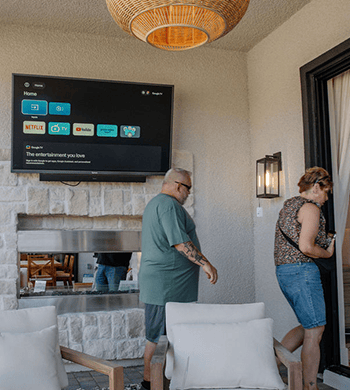

A well-planned backyard setup turns any patio into a true entertainment space. Knowing how to install outdoor TV correctly makes the difference between a stable, long-lasting setup and one that struggles with glare, vibration, or weather exposure.
From choosing the right location and brightness level to mounting methods and safety checks, this guide explains how to install outdoor TV clearly and efficiently. Whether you're exploring practical outdoor TV installation ideas or preparing for a full weekend project, the steps below keep the process simple and professional—especially when working with a weather-rated Sylvox outdoor TV designed for outdoor environments.
Where is the Best Place to Put an Outdoor TV
The best place to put an outdoor TV is in a shaded area, at eye level, and directly facing your main seating space.
1. Analyze Sun Exposure
Observe your yard during peak daylight hours. Pay special attention to western exposure in the late afternoon. Avoid positioning the TV directly facing the setting sun, as strong glare from west-facing light can reduce visibility and increase heat buildup.
- Partial sun → standard outdoor brightness
- Direct full sun → high-brightness model needed
If your patio gets mixed light throughout the day, a Sylvox outdoor TV can make the setup easier because you can choose a model that matches soft daylight or stronger sunlight conditions. Make sure your TV's brightness level matches the actual sun exposure before installation. If you have a full sun outdoor TV, it is best installed on open patios or poolside walls with direct sunlight. A partial sun outdoor TV is better suited for covered decks or shaded areas.
2. Choose the Right Installation Height
Mount slightly above seated eye level.
Avoid placing the TV too high, which causes neck strain, or too low, which increases glare.
3. Optimized the Viewing Angle
Center the TV to the main seating area.
Minimize extreme side angles to preserve color accuracy and clarity.
Choosing the correct position first prevents unnecessary repositioning later.

What Do You Need to Install Outdoor TV
To install outdoor TV, you need a solid mounting surface, adequate load support, weatherproof power access, and the right installation tools.
1. Identify Wall or Structure Type
Different materials require different anchors:
- Wood studs → Lag bolts into studs only
- Brick → Masonry anchors
- Concrete → Expansion bolts
- Stone → Heavy-duty anchors
Never mount directly into siding or drywall alone.
2. Confirm Load Capacity
Large TVs (65–75 inches and above) require solid structural support.
- Ensure the mount's weight capacity exceeds your TV's weight
- Confirm the wall or beam is strong enough to support the TV
- Use corrosion-resistant hardware
For heavier models, structural integrity matters more than convenience. For larger patio setups, a Sylvox outdoor TV is a better fit than a living room TV, with a weather-rated body that stands up to moisture, heat, and outdoor mounting conditions.

3. Plan Power & Cable Routing
Outdoor installations require:
- Weatherproof outlets (GFCI recommended)
- Outdoor cable management
- Protected wiring paths
Keep cables organized and shielded from moisture exposure.
Proper preparation prevents instability and electrical risk.
4. Gather the Necessary Tools
Most outdoor TV installations require:
- Power drill
- Level
- Stud finder (for wood walls)
- Socket wrench or spanner
- Screwdriver
- Masonry anchors (for brick or concrete surfaces)
- Outdoor-rated lag bolts or heavy-duty fasteners
Depending on the installation type, you may also need a ladder and any mounting hardware included with your TV or mount.
How to Install Outdoor TV on a Wall
Use a VESA-compatible mount and secure it into studs or solid surfaces. See the step-by-step video below.
Wall mounting remains the most secure and widely used method. If you're researching how to install an outdoor TV, follow this structured process.
For durable installations, use a weather-rated wall mount designed for outdoor conditions. For example, a reinforced mounting system like the Sylvox outdoor TV wall mount is built to withstand moisture and long-term outdoor exposure.
1. Step-by-Step Installation
Step 1: Mark your desired height and center line.
Step 2: Locate studs or solid masonry.
Step 3: Drill pilot holes into studs or masonry anchors.
Step 4: Secure the mounting bracket firmly to the wall.
Step 5: Check for level before fully tightening all bolts.
Step 6: Attach the mounting rails to the back of the TV.
Step 7: Lift and hang the TV onto the mounted bracket (two people recommended).
Step 8: Tighten all locking or safety screws.
Double-check all fasteners before releasing support.

2. Wall-Specific Notes
- Wood walls: Mount into studs only.
- Brick or concrete: Use expansion anchors strong enough to support the TV.
- Stone: Drill carefully; avoid mortar joints.
3. Large-Size Safety Tip
For 65–75 inch and larger models:
- Always lift with two people
- Support the back panel while lifting
- Avoid pressure on screen edges
Large displays require careful handling to prevent damage.
How to Install an Outdoor TV to the Ceiling
To install outdoor TV on a ceiling, choose a ceiling mount, then mount it to a solid beam or support structure. See the step-by-step video below.
If your patio has overhead beams or a pergola, ceiling mounting can feel more natural than taking up wall space. It keeps the layout open and gives you flexible viewing angles.
1. Best Use Cases
- Pergolas
- Covered decks
- Outdoor bars/kitchens
- Gazebos
Always mount into structural beams, not decorative trim.
2. Step-by-Step Installation
Step 1: Locate a solid structural beam or support point.
Step 2: Secure the ceiling mounting base with heavy-duty bolts.
Step 3: Assemble and attach the main support structure according to the mount design.
Step 4: Attach the mounting rails to the back of the TV.
Step 5: Lift and secure the TV onto the mounted structure (two people recommended).
Step 6: Adjust tilt, height, or extension as supported by your mount.
Ensure all joints are tightened securely.

3. Safety Tips
- Large-format outdoor TVs require reinforced beams.
- Confirm load capacity before mounting.
- Check for vibration or sway after installation.
Overhead installations must resist wind and movement. When ceiling mounting a Sylvox outdoor TV, make sure the beam, mount, and locking hardware all work together to keep the screen steady.
How to Install Outdoor TV Without Drilling
You don't need to drill when using a rolling TV cart or an outdoor TV lift cabinet for a stable and flexible setup.
1. Rolling TV Cart
Learn how to install outdoor TV using a rolling cart.
A rolling TV cart allows repositioning across decks or patios. Many homeowners choose a reinforced design such as a Sylvox rolling TV cart for added flexibility when hosting gatherings on patios or poolside decks.
Steps:
Step 1: Install the wheels onto the base legs and tighten securely.
Step 2: Assemble the base frame by connecting the legs with the lower cross beam.
Step 3: Assemble the upper support structure (columns and upper cross beam).
Step 4: Secure the assembled upper structure to the base frame.
Step 5: Attach the mounting rails to the back of the TV.
Step 6: Lift the TV and secure it onto the main support structure (two people recommended).
Step 7: Lock all wheels and check stability.
*Rolling cart designs may vary slightly, but most follow this general assembly process.
Important safety notes:
- Always lock casters during use.
- Avoid uneven or sloped surfaces.
- Do not leave exposed in strong winds.

2. Outdoor TV Lift Cabinet
See how to install outdoor TV in a lift cabinet for protected outdoor use.
Another way to mount an outdoor TV without drilling is to use a weatherproof outdoor TV lift cabinet, which supports the TV internally while keeping it protected when not in use.
Steps:
Step 1: Position the cabinet on a level, solid surface.
Step 2: Install or secure the lift mechanism (if not pre-installed).
Step 3: Lock the casters and deploy any support legs to stabilize the cabinet.
Step 4: For enhanced outdoor stability, secure the cabinet to the ground if required.
Step 5: Attach the mounting rails to the back of the TV.
Step 6: Hang and secure the TV onto the lift system (two people recommended).
Step 7: Connect power and control cables.
Step 8: Test the lift function and ensure ventilation remains unobstructed.
Key considerations:
- Ensure airflow for heat dissipation.
- Avoid sealing moisture inside.
- Confirm cabinet weight capacity.
Common Outdoor TV Installation Mistakes
Even small errors can shorten the lifespan of your outdoor TV.
Avoid these frequent issues:
1. Using an indoor TV outdoors
→ Indoor models are not built for outdoor exposure.
2. Not mounting into structural support
→ Can cause instability, wall damage, or even the TV falling.
3. Skipping waterproof outlets
→ Increases electrical risk.
4. Forgetting anti-drop screws
→ Safety risk during vibration.
5. Ignoring wind load
→ Especially important in open patios and pool areas. Avoid installing in high-wind zones or exposed corners where strong gusts increase fall risk.
Avoiding these mistakes ensures long-term performance and safety.
Final Thoughts
Learning how to install outdoor TV properly ensures safe, long-lasting performance.
With the right preparation and equipment, installing an outdoor TV becomes a straightforward upgrade that transforms your outdoor space into a reliable entertainment zone year-round—especially when paired with a weatherproof Sylvox outdoor TV designed for long-term outdoor performance.
If you're still deciding which brightness level fits your space, this Outdoor TV Buying Guide can help clarify the differences.


Leave a comment