


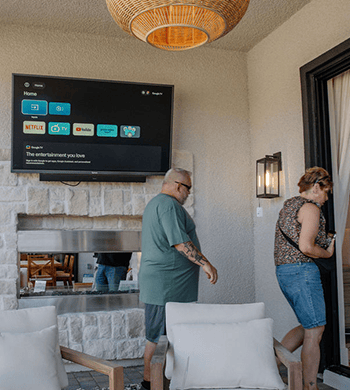

A TV can look outdoor-ready in a product photo, but the real test starts after it is mounted outside. Bright daylight, summer heat, rain, dust, humidity, and cold weather can all affect how clear the picture looks and how long the TV stays reliable.
That is why choosing an outdoor TV is not just about screen size or smart features. This outdoor TV buying guide shows you what to look for in an outdoor TV, from brightness and weather protection to size, sound, smart features, and the right model for your space.
How to Choose an Outdoor TV
To choose an outdoor TV, match the TV to your space first: sun exposure, weather conditions, viewing distance, and mounting setup matter more than screen size alone. When comparing what to look for in an outdoor TV, check brightness, weather protection, durability, picture quality, sound, and smart features together.
Use the sections below to narrow your options faster and choose the right fit.
Choose by Brightness / Sun Exposure
The easiest way to choose an outdoor TV is to match it to your outdoor space. Before choosing an outdoor TV, look at where the TV will be installed, how much sun hits that spot, and what time of day you usually watch. A shaded patio, an open poolside wall, and a west-facing deck do not need the same brightness.
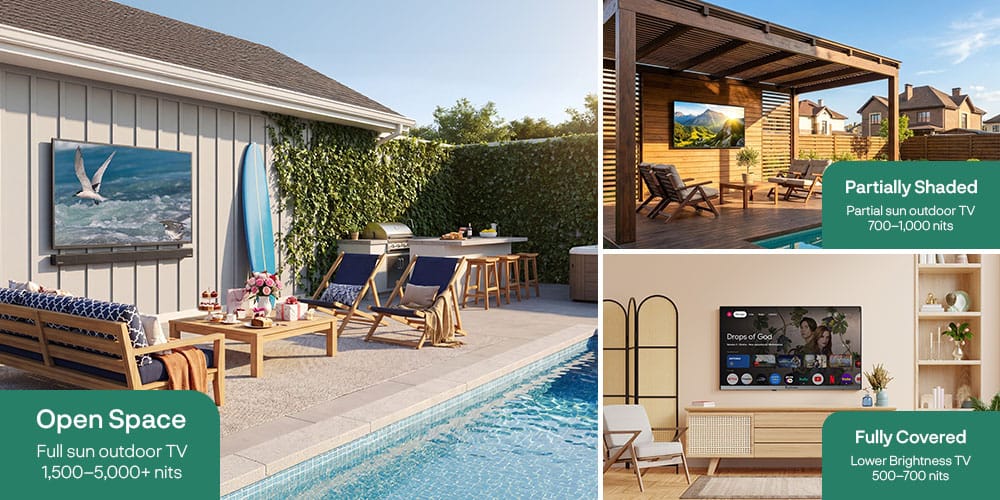
Use this table to narrow the choice before comparing screen size, smart features, or price:
| Brightness | Best fit | Sun exposure | Your outdoor space | Buying tip |
|---|---|---|---|---|
700–1,000 nits | Partial sun outdoor TV | Shaded or filtered light | Covered patio, gazebo, shaded deck, outdoor kitchen, covered balcony, pergola | Good balance of brightness, comfort, and value |
2,000+ nits | Full sun outdoor TV | Bright daylight, little cover | Poolside wall, open patio, uncovered backyard, rooftop deck, west-facing patio, pool club | Choose this when visibility matters more |
Nits measure screen brightness, and they matter outdoors because sunlight can make a regular 4K indoor TV look dim or washed out. Resolution tells you how sharp the picture is, but brightness, anti-glare treatment, and heat control determine whether the screen stays clear in daylight.
For example, a Sylvox outdoor TV designed for partial sun may suit a covered patio very well, while a full sun model helps an uncovered poolside setup look clear, bright, and ready for daytime viewing. If you are unsure which type fits your space, compare examples in the full sun vs partial sun outdoor TV guide, or browse the full sun outdoor TV collection and partial sun outdoor TV collection once you know your installation environment.
Choose by Weather Protection
Waterproofing alone is not enough for year-round outdoor use. A reliable outdoor TV should protect against water, dust, humidity, insects, temperature changes, and corrosion.
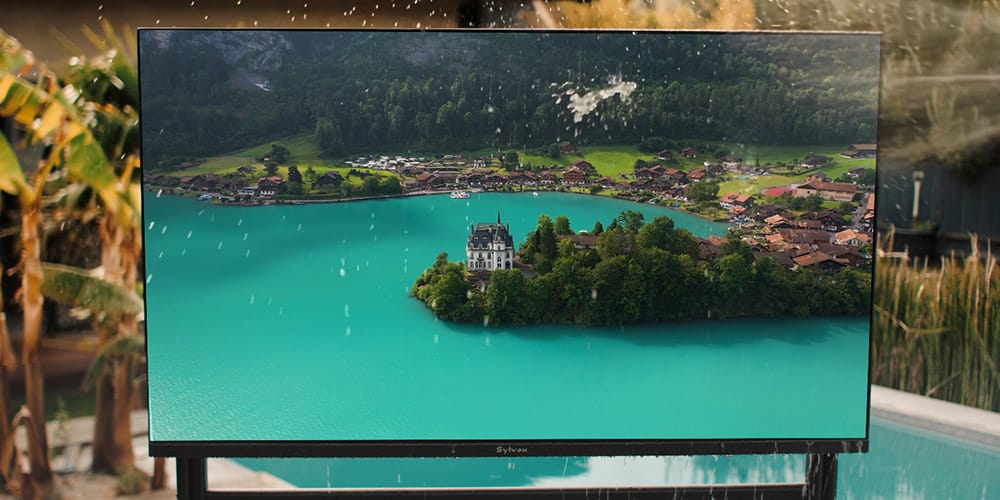
Many low-cost products lead with the word "waterproof," but outdoor durability depends on the whole structure. Instead of stopping at the waterproof claim, it helps to look at the IP rating, housing material, sealing design, and whether the TV is made for long-term outdoor exposure.
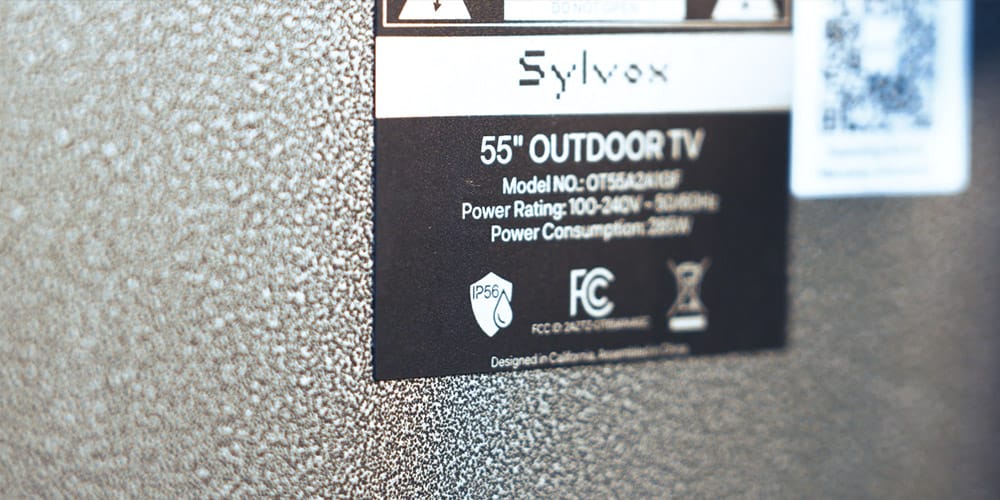
The IP rating has two parts. The first number relates to dust protection. The second number relates to water protection. For outdoor TV use, both matter because the TV may face rain, wind-blown dust, sprinkler spray, moisture, and dirt from regular backyard use. For example, the IP56 weatherproof rating on Sylvox outdoor TVs gives shoppers a more specific benchmark than a general "waterproof"label.
| Feature to check | Why it matters outdoors |
|---|---|
IP rating | Shows protection against dust and water |
Metal housing | Helps resist impact, warping, and outdoor wear |
Sealed structure | Helps reduce water, moisture, dust, and insect entry |
Anti-corrosion design | Important near pools, coastal areas, and humid climates |
Outdoor-rated remote and accessories | Small details can fail first if they are not protected |
When comparing outdoor TVs, give more weight to models that clearly explain their IP rating, housing, and sealing design. Those details make it easier to choose a TV that is truly ready for long-term outdoor use.
Choose by Year-Round Durability
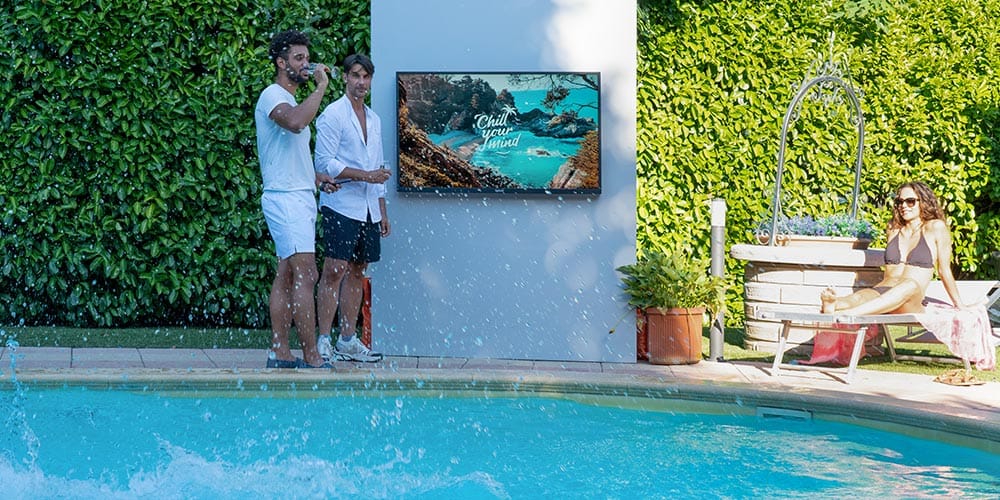
A true outdoor TV can stay outside year-round when it is designed for heat, cold, moisture, and long-term exposure. The key is not only whether it survives rain, but whether the screen, backlight, housing, and internal components remain stable through changing seasons.
Heat is one of the biggest challenges. When a TV sits in strong sun, the housing and panel can get much hotter than the air temperature. Poor heat control can affect brightness, color, backlight life, and internal electronics. Cold weather also brings moisture and temperature swings, which can lead to condensation, slower screen response, unstable startup, and stress on internal components.
Before buying, check these details:
| Question | What a useful answer should include |
|---|---|
What is the operating temperature range? | A clear temperature range, not a vague "all-weather"claim |
How does the TV manage heat? | Heat-resistant structure, panel protection, and airflow design |
Can it handle winter storage outside? | Cold-weather performance, condensation control, and simple cover tips |
Is it made for permanent outdoor installation? | A clear statement that the TV is designed to remain outdoors |
If you are comparing outdoor TVs against indoor TVs, the difference becomes easier to see in this outdoor TV vs indoor TV guide. For colder climates, choosing the right outdoor TV also means knowing what temperature can a TV withstand outside, especially if you plan to keep it mounted through winter instead of moving it indoors.
Choose by Screen Size and Viewing Distance
Outdoor TV size should be based on viewing distance, space scale, and how people use the area. Do not choose only by the wall size, because outdoor spaces are usually more open than indoor rooms.
A screen that feels big enough in a living room may feel small across a patio or pool area. If people will watch from a dining table, lounge chairs, or a poolside seating zone, measure the real viewing distance first.
| Suggested size range | Outdoor space |
|---|---|
32", 43", 50" | Patio corner, outdoor kitchen, covered balcony |
55", 65" | Family backyard, deck, covered patio, small commercial patio |
75" | Pool area, open backyard, group watch parties |
85", 110" | Large terrace, pool club, sports bar patio, luxury outdoor cinema |
For most family outdoor spaces, 55" and 65" are comfortable choices. For poolside viewing or sports nights with guests, 75" often feels more natural because people sit farther away. For business spaces or high-end backyard cinema setups, larger sizes help the screen stay visually present across a wide area.
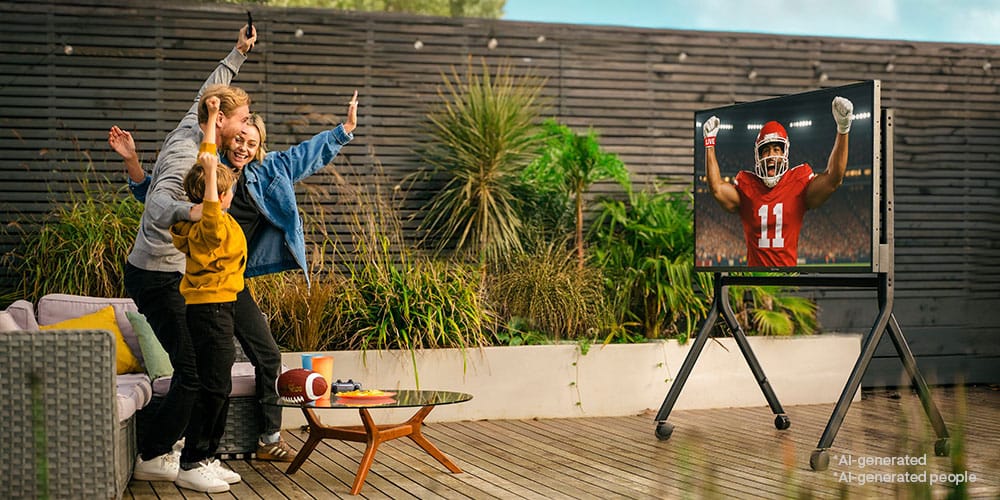
A Sylvox outdoor TV lineup covers smaller patio-friendly sizes through large-format models, so the decision can be made around the real viewing setup.
Choose by Picture and Sound Quality
Outdoor viewing quality depends on brightness, color, motion, anti-glare treatment, and audio power. A screen that is simply bright may still feel flat if the color, contrast, and sound are not built for open-air viewing.
For sports, movies, poolside gatherings, and evening watch parties, you should look beyond basic visibility. The better question is: will the picture still feel vivid, smooth, and enjoyable once the TV is outside?
| What you care about | Feature to look for | Why it helps |
|---|---|---|
Clear everyday viewing | 4K UHD | Keeps details sharp on larger outdoor screens |
Richer color | QLED or Helio QLED | Helps colors look fuller and more vivid |
Sports and fast action | 120Hz refresh rate | Makes motion look smoother during games and action scenes |
Daytime viewing comfort | Anti-glare or matte screen | Reduces distracting reflections and improves comfort |
Movie-night immersion | Dolby Vision, Dolby Atmos | Adds stronger picture and sound depth |
Bigger outdoor spaces | Subwoofer or soundbar support | Helps audio carry better in open-air areas |
The Gaming series and Cinema series in the Sylvox outdoor TV range are especially relevant for users who care about sports and motion smoothness, thanks to 120Hz support. QLED and Helio QLED models are better for users who want stronger color performance for movies, streaming, and premium backyard entertainment.
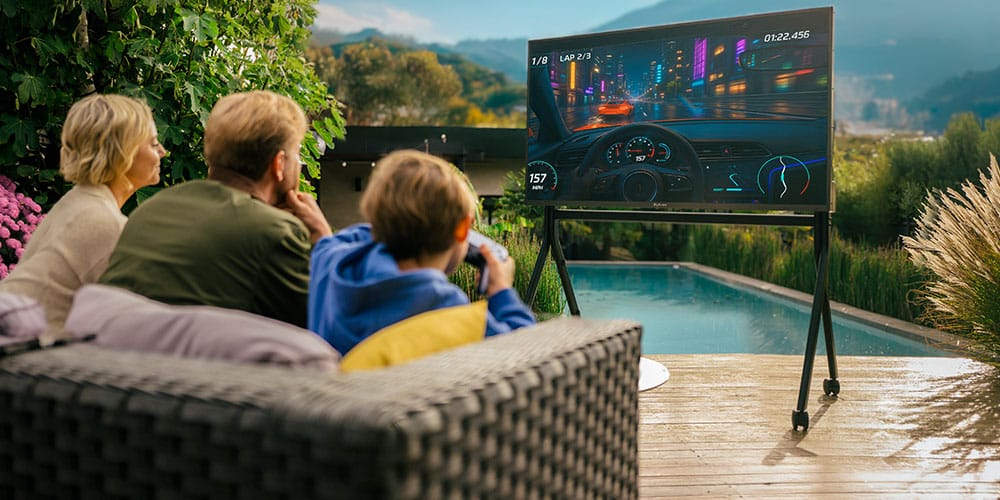
Sound also needs more attention outdoors. Walls and ceilings help sound bounce indoors; open patios and pool areas do not. Built-in Dolby Atmos can improve the base experience, while larger or noisier spaces may benefit from an outdoor soundbar for fuller audio.
Choose by Smart Features
A smart outdoor TV is worth it if you want to walk outside, turn it on, and start watching without setting up extra devices every time. If you want fewer cables, fewer external devices, and faster access to streaming, smart features make everyday outdoor use much easier.
In real backyard use, people often want to open Netflix, YouTube, Prime Video, Disney+, sports apps, live TV, or cast from a phone without setting up extra boxes every time. That is where Google TV, voice control, Wi-Fi, Bluetooth, and screen mirroring become practical features rather than nice extras.
| Smart feature | Why it matters outdoors |
|---|---|
Google TV | Puts streaming apps, live channels, and recommendations in one place, reducing the need for extra streaming devices |
Voice control | Useful when cooking, hosting, or relaxing outside |
Screen mirroring | Makes phone-to-TV casting easier |
Wi-Fi and Bluetooth | Supports wireless entertainment and audio options |
HDMI and USB ports | Keeps gaming consoles, media players, and accessories flexible |
A smart outdoor TV is especially useful for patios, pool areas, and outdoor kitchens where cable clutter is annoying. It also helps when the TV is mounted in a fixed position and you do not want to keep plugging and unplugging devices.
When choosing an outdoor TV, smart features are helpful, but outdoor durability should still be part of the core decision. With a Sylvox outdoor TV, outdoor-rated construction and smart entertainment work together, giving you a screen that is built for the backyard and easy to enjoy every day.
Choose by Installation Setup
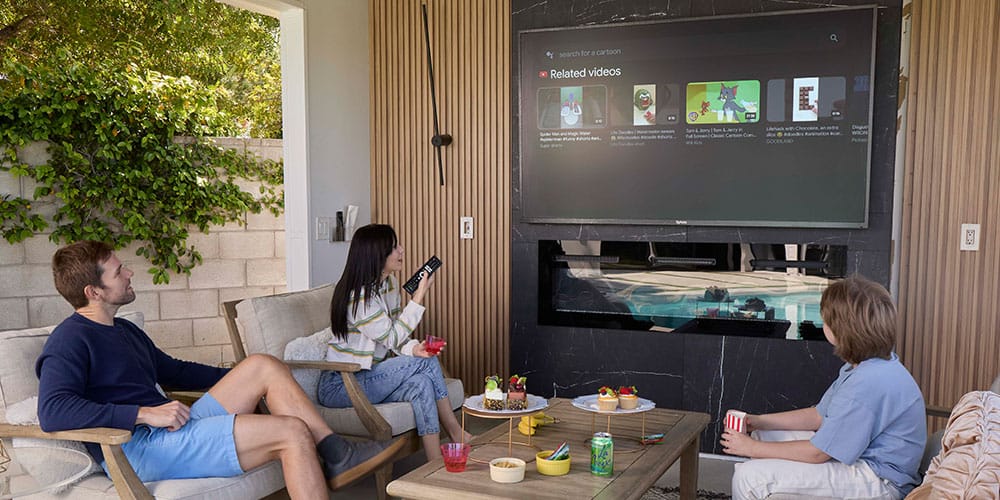
The way you install an outdoor TV affects comfort, safety, and everyday usability. Before choosing a model, look at the viewing position, sun exposure, mounting surface, cable access, and whether you want the TV fixed in one place or easy to move.
| Installation setup | Best for | Buying decision tip |
|---|---|---|
Wall mount | Patios, poolside walls, outdoor kitchens | Best for a clean, permanent setup with a strong wall behind it |
Ceiling mount | Pergolas, gazebos, covered decks | Good when wall space is limited and there is a solid overhead beam |
Rolling TV cart | Flexible patios, decks, poolside parties | Better if you want to move the TV between different outdoor zones |
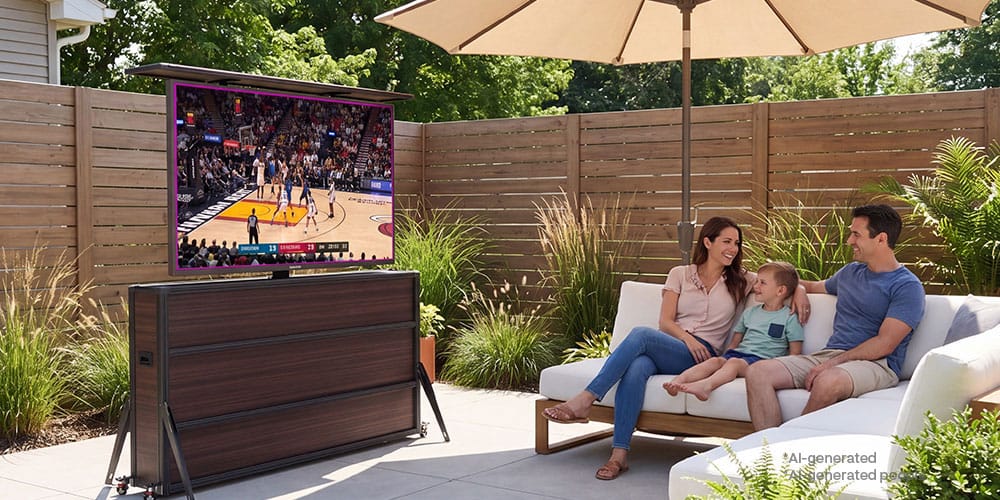
Outdoor TV lift cabinet | Premium patios, pool areas, multi-use backyards | Good for a cleaner look and added protection when the TV is not in use |
A simple rule: choose a fixed mount when the viewing area will not change, and choose a cart or lift cabinet when your outdoor layout needs more flexibility. For more installation details, the how to install an outdoor TV guide can help you check placement, mounting support, power access, and cable routing before you buy.
Ask the Seller 5 Questions Before You Buy Outdoor TV
Before choosing an outdoor TV, ask five questions that reveal how well the product fits your space, weather conditions, and daily use.
| Question to ask | Why it matters |
|---|---|
Is my space better for partial sun or full sun? | Prevents choosing an outdoor TV that is too dim for the location |
How many nits is the TV? | Helps you judge real outdoor visibility |
What is the IP rating? | Confirms dust and water protection |
What is the housing made of? | Shows whether the TV is built for outdoor wear |
What is the operating temperature range and heat design? | Helps judge long-term seasonal reliability |
These outdoor TV tips are useful because they turn vague claims into checkable details. Once you know the brightness, IP rating, housing, and temperature range, it becomes much easier to choose a TV that feels right for your backyard, not just right on paper.
Find the Right Outdoor TV for Your Space
The best outdoor TV is the one that matches your real installation environment. Start with sunlight, then check brightness, weather protection, size, picture quality, sound, and smart features.
For bright, open spaces, explore this full sun outdoor TV collection. For covered patios, decks, and shaded outdoor kitchens, compare partial sun outdoor TVs. A well-matched Sylvox outdoor TV can turn your backyard into a space people actually use more often, without making every movie night depend on the weather.


Leave a comment