


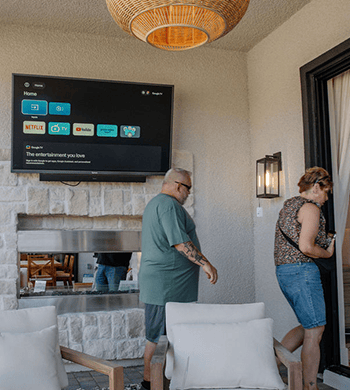

An open patio changes the audio decision. Indoors, walls and ceilings help contain sound. Outdoors, dialogue has to cross open space while competing with conversation, traffic, pool equipment, wind, and other background noise.The practical answer is based on seating, not just speaker power. A weather-resistant soundbar under the TV is usually the simpler choice when viewers sit in one compact group near the screen. Properly outdoor-rated speakers closer to the seating area can work better when the patio is deep, seats are spread out, or people gather far from the TV. A larger space may justify a hybrid layout, but only after the basic placement problem is clear.
Quick Decision Table
| Patio condition | Better starting point | Why |
|---|---|---|
One seating group close to the TV | Soundbar below the screen | Keeps dialogue and picture in the same direction with a simple connection path |
Wide or deep seating area | Separate speakers nearer the seats | Reduces the distance sound must travel and can make coverage more even |
Several zones used at different times | Zoned or hybrid layout | Allows sound to follow the occupied area instead of covering the entire yard |
Minimal wiring is the priority | Soundbar | Usually concentrates power, signal, and mounting near the TV |
Lowest practical volume across many seats is the priority | Speakers near the listening area | Proximity can improve intelligibility without relying on one loud source at the screen |
Why Built-In TV Audio May Feel Different Outdoors
Built-in speakers can be enough, but performance depends on the exact TV and patio. Audio configurations vary by model, and specifications alone do not guarantee clarity at a particular seat. Check the exact model's audio specifications and test it from the normal seating area.Play familiar dialogue from every normal chair at an acceptable evening volume. If voices are clear near the screen but vague at the back, distance and coverage are likely contributing. If dialogue is unclear even close up, review the TV's sound mode and source settings before buying hardware.Readers comparing current models can use the Sylvox outdoor TV collection to check the specifications for the exact series and size instead of assuming every model has the same audio system or ports.
When a Soundbar Is the Better Fit
A soundbar makes sense when the TV and seats form one clear viewing zone. Mounting the audio source below the display keeps voices anchored near the people on screen. It also avoids running speaker wire to multiple points around a finished patio.Choose this route when the main seats are close to the TV, viewers face one direction, the wall has a suitable mount and power plan, one audio zone is enough, and simple operation matters more than adjustable coverage.Connection method matters. HDMI ARC can simplify TV control when both devices support and are configured for it. Bluetooth may reduce signal wiring, but it should be tested for lip-sync, reconnection, and control behavior with the actual TV. It is not automatically the best link just because it is wireless.For a concrete Sylvox option, the Elf S3 outdoor soundbar is listed with IP65 protection, HDMI ARC/CEC, Bluetooth 5.3, wall-mounting support, Dolby Atmos. These features make it relevant to an outdoor TV installation, but they do not predict how evenly sound will reach a specific patio. Placement and listening distance still control the result.
When Speakers Near the Seats Make More Sense
Separate outdoor-rated speakers become more attractive as the seating area moves away from the screen. Instead of asking one source at the TV to project dialogue across the entire patio, closer speakers shorten the listening distance. That can allow a more moderate overall level and reduce the difference between the closest and farthest chairs.This is a stronger starting point when seating stretches across a long deck, wraps around a pool, or forms several clusters; the TV is far from the primary listeners; and wiring plus the required amplifier or controls can be planned correctly.The tradeoff is complexity. Every speaker needs an outdoor-suitable location, secure mounting, and a planned signal path. The amplifier and connection chain must also match the speakers. Because separate-speaker setups vary by patio, this guide focuses on layout and installation factors rather than recommending a specific speaker package. Have an installer assess cable routes, power, grounding, weather exposure, and local requirements.
Test the Layout Before Final Installation
A short listening test is more useful than comparing wattage alone. Mark the usual seats, then test speech-heavy content at the time of day the patio is normally used.
- Start with the TV. Note the lowest volume that keeps dialogue understandable in the closest and farthest seats.
- Mock up both positions. Safely compare a suitable test speaker near the screen and closer to the listening zone. Lower the volume for the near-seat test.
- Check every normal seat. A layout that works in the center can be loud at the front and weak at the sides.
- Test the real source chain. Check streaming apps, external boxes, lip-sync, controls, and reconnection after power cycling.
Do not leave indoor test equipment outdoors, and do not treat a temporary position as an approved permanent mount.
Weather Protection and Neighbor Impact
“Outdoor” should apply to the whole installation. Verify stated environmental protection, connectors, power components, mounts, and cable routing. One product's IP rating does not protect exposed connections.Also listen from the property edge. If dialogue is hard to hear at the seats but very obvious beyond the patio, raising the screen-mounted source further is probably the wrong correction. Moving properly rated speakers nearer the occupied area, changing their direction, or creating a smaller listening zone may be more considerate. Local noise rules and site conditions vary, so the goal is controlled coverage rather than a promised compliance result.
The Best Choice by Patio Type
For a compact covered patio, start with the TV, then add a Sylvox outdoor soundbar if dialogue needs more presence. On a deep deck, speakers near the distant seating group may provide clearer sound at a lower level. For several poolside zones, plan coverage by zone before choosing hardware.Do not choose by the largest number on a specification sheet. Map the seats, test dialogue, confirm the connection path, and use equipment designed for its actual exposure. The Sylvox viewing setup should fit the space rather than simply increase the volume.
FAQ
Is a soundbar always better than built-in outdoor TV speakers?
No. Start with the TV and normal seating distance. A soundbar helps when a compact viewing area needs clearer, screen-focused audio, but some installations need no add-on.
Will speakers near the seats create a lip-sync problem?
Distance alone does not determine lip-sync. Source processing, wireless links, and receivers can affect timing. Test the complete chain before permanent installation.
Can an indoor soundbar be used on a covered patio?
A roof does not eliminate humidity, condensation, wind-driven moisture, dust, or temperature change. Follow each component's environmental guidance; “covered” does not mean “indoors.”
Should the speakers point toward the house or the yard?
Direct sound toward listeners where practical, then check all seats and the property edge. A qualified installer can help address dead spots and excessive spill.
What should be checked before buying an audio add-on?
Confirm the exact TV model, audio outputs, controls, mounting location, power, cable path, weather exposure, seating map, and acceptable evening volume.


Leave a comment