


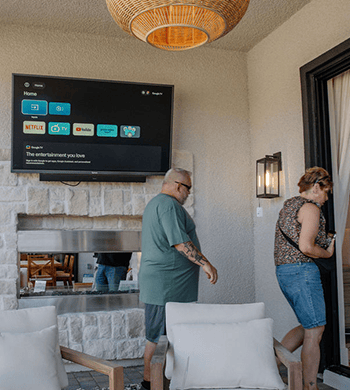

For an indoor TV, picture quality is usually the first thing people compare. For an outdoor TV, brightness should come first: if the screen cannot stay clear in daylight, the rest of the viewing experience quickly falls short.
But brightness is only the starting point. A good outdoor TV also needs the right protection for real outdoor use, including a reliable IP rating, a wide operating temperature range, durable metal housing, and strong long-term stability. This guide breaks down what those outdoor TV specs actually mean, so you can choose an outdoor TV that stays clear, stable, and reliable season after season.
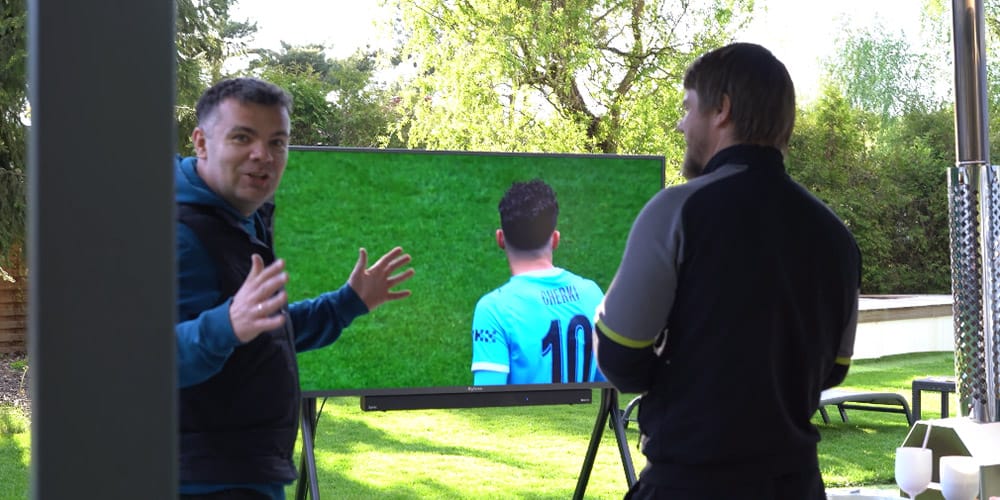
Brightness (Nits): The Key to Daytime Visibility
A nit is a standard unit of brightness: the higher the number, the brighter the screen. Outdoors, nits matter because strong daylight can wash out the picture and make details, subtitles, and fast-moving scenes harder to see.
When browsing outdoor TVs, you will often see two key terms: Partial Sun and Full Sun. These refer to two common outdoor lighting environments and help you judge how much brightness the screen needs to stay clear during daytime viewing.Sylvox uses these categories to make brightness easier to compare across real installation spaces. The table below shows how to tell which environment you have and which brightness range is the better fit.
| Light Condition | Brightness | Typical Spaces | Sylvox Series |
|---|---|---|---|
Partial Sun | 1,000 nits | Shaded patio, covered deck, pergola, semi-covered outdoor space | |
Full Sun | 2,000 nits | Poolside, open garden, uncovered patio | |
Full Sun | 3,500~5,000 nits | Strong sunlight, all-day open spaces, premium outdoor cinema setups |
Not sure which category your space falls into? Two simple questions help narrow it down. Between 2 p.m. and 5 p.m. (not just at the moment you are checking it), does direct sunlight hit where the TV will be mounted? And in that west-facing direction, is there a roof overhang, pergola, tree cover, or wall blocking the sun?
- If the TV stays mostly in shade and only gets occasional angled sunlight, it is a Partial Sun environment. A 1,000-nit outdoor TV is typically enough for everyday viewing.
- If the TV faces direct sun for extended periods — especially near a pool, on an open lawn, a rooftop deck, or a west-facing patio — that's a Full Sun environment. In that case, a 2,000-nit outdoor TV or higher is the better choice.
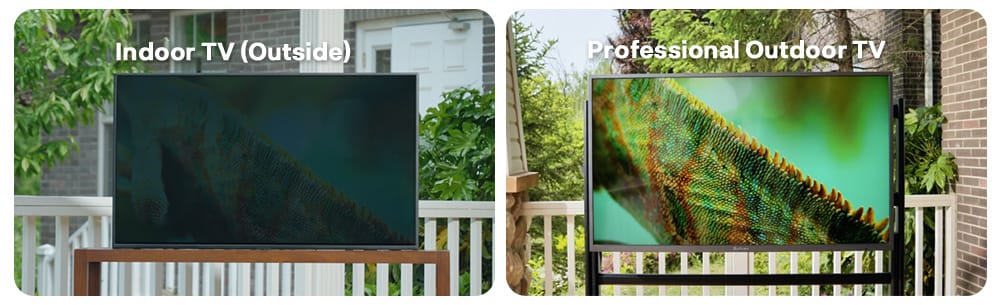
Still wondering whether a bright indoor TV can do the same job? In most living rooms, 250–300 nits is bright enough because the lighting is stable and easier to control. But once that same TV is moved outside, the picture can quickly look washed out under strong daylight. Dark details become harder to see, subtitles are less readable, and sports or fast-moving scenes lose clarity. Some premium indoor TVs can reach higher peak brightness, but that usually happens only for short moments or on small parts of the screen. For outdoor viewing, what matters more is whether the TV can keep the whole picture bright and clear for long periods under real sunlight.
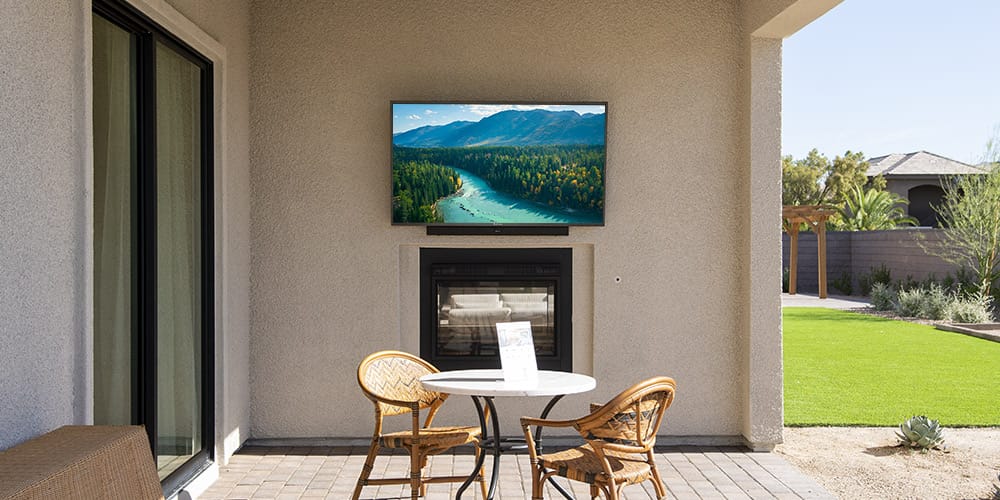
A clear outdoor picture depends on more than brightness. If you often watch sports, action movies, or play games outside, the 120Hz refresh rate in Sylvox Gaming, Cinema, and Cinema Pro models can make fast-moving scenes look smoother. For richer color, the QLED versions across Sylvox outdoor TV series are a strong picture-quality upgrade. In the Cinema and Cinema Pro Series, Helio QLED further enhances contrast and color depth in complex outdoor lighting, helping bright scenes stay controlled while darker scenes retain more detail.
With the right combination of specs, your backyard can become a true all-weather outdoor theater or private game-day viewing zone. But picture performance only lasts if the TV is protected from the weather, which is where the next three durability specs matter.
IP Rating: What IP56 Actually Protects Against
Many electronic products say they are "waterproof," but the word on its own doesn't tell you much. Does it mean the product can handle a light drizzle? A heavy downpour? A direct splash from a garden hose? The IP rating exists to turn that vague claim into a standard you can compare.
The IP Code standard (IEC 60529) uses the two digits after IP to represent two separate kinds of protection. The first number refers to dust resistance; the second number refers to water resistance. All Sylvox outdoor TVs are rated IP56. The first digit, 5, means the device is protected against dust ingress that could affect normal operation. The second digit, 6, means the device can resist powerful water jets from any direction. In real outdoor use, this helps you understand whether the TV has the protection needed for poolside areas, open backyards, and spaces exposed to rain and dust. Here is what each part of IP56 means in real outdoor use:
| Protection | IP56 Standard | Real-World Scenarios |
|---|---|---|
Dust (IP5X) | Dust cannot fully penetrate the enclosure; limited contact is allowed but cannot affect normal operation | Beach sand, coastal salt air, construction dust, and daily dust buildup in dry climates |
Water (IPX6) | Protected against powerful water jets from any direction, tested at approximately 100 kPa | Heavy rain, pool splashes, hose rinsing, and accidental sprinkler spray |
In real life, IP56 is not just about whether the TV can survive a little rain. It covers the mixed conditions outdoor TVs often face: sudden summer storms, splashes from kids playing by the pool, accidental sprinkler spray, long-term dust buildup, windblown sand, and the salt air and moisture found in coastal areas.
Every Sylvox weatherproof outdoor TV, from the entry-level Deck Pro 3.0 Series to the flagship Cinema Pro Series, is built with IP56 protection and tested to the same outdoor protection standard. So you do not need to worry whether one series is "waterproof enough" for basic outdoor use. Instead, you can focus on brightness, viewing environment, picture quality, and screen size.
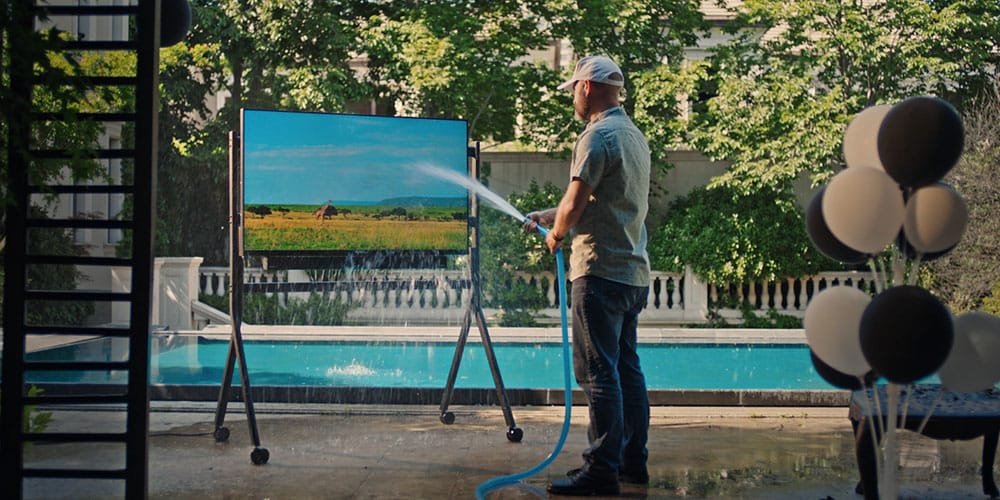
It's also worth knowing that weatherproofing doesn't stop at the housing. Sylvox adds a protective coating to the internal motherboard, designed to resist moisture, mold, and salt spray from the inside out. Think of it in two layers: IP56 is the outer barrier, keeping rain, dust, and water vapor from getting in. The internal board coating is the backup layer, protecting the electronics from humidity and coastal air. For poolside installs, beachfront homes, and humid climates, that combination holds up better than relying on the housing alone.
Operating Temperature: Built for Every Season
Many users ask, "Can I leave the TV outside in winter?" The answer comes down to the operating temperature range.
Indoor TVs are designed for stable environments such as living rooms, bedrooms, and offices. They are built for relatively consistent room temperatures, not summer heat after hours of direct sun, freezing winter nights, or fast temperature swings within the same day. Outdoor TVs are different. They are designed for real seasonal changes. The table below shows how regular indoor TVs and Sylvox outdoor TVs differ in temperature adaptability.
| TV Type | Designed For | Temperature Range |
|---|---|---|
Standard indoor TV | Living room, bedroom, office — controlled indoor temps | 50°F–104°F (10°C–40°C) — not suitable for long-term outdoor exposure |
Sylvox outdoor TV | Open patios, poolside, decks, permanent outdoor installations | Wide operating range from -22°F to 122°F (-30°C to 50°C) |
Heat damage usually does not happen all at once. It slowly affects the backlight module, mainboard, power supply, and sealing structure. For example, under direct summer sun, the surface temperature of the TV body may become much higher than the air temperature. If internal heat cannot escape, components age faster. Cold weather creates another set of problems. Screen response, electronic stability, and material contraction can all be affected. Repeated expansion and contraction from temperature changes can also place long-term stress on seams, seals, and internal structures.
The wide operating range of -22°F to 122°F (-30°C to 50°C) allows Sylvox outdoor TVs to cover most home outdoor environments across the United States. In colder states such as New York, Washington, and Illinois, typical winter temperatures in many residential areas usually still fall within the operating range of Sylvox outdoor TVs. In extreme cold snaps, at high altitudes, or in unusually severe weather, extra protection should still be used according to the product instructions. But for day-to-day use, the wide operating temperature range gives you more confidence to keep the TV outside year-round instead of removing and storing it every time the seasons change.
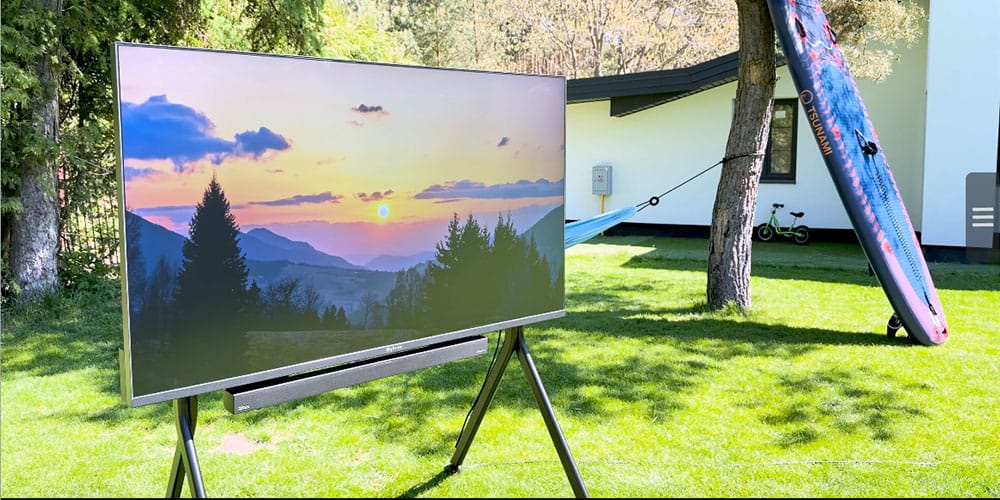
For most homeowners, that matters more than it might seem. An outdoor TV install usually involves a wall mount, cabling, possibly a soundbar, and a clean way to hide or protect the wiring. Taking it down and reinstalling it frequently is inconvenient. It may also affect installation stability. The value of a wide operating temperature range is simple: less seasonal maintenance and more confidence in long-term outdoor use.
Metal Housing: More Stable for Long-Term Outdoor Use
The housing of an outdoor TV does much more than define how it looks. It directly affects heat dissipation, deformation resistance, corrosion resistance, and sealing protection. It also influences how stable the TV remains after years of outdoor use. This is especially important under direct sunlight, temperature swings, humid air, and poolside conditions. Over time, body materials can make a major difference in durability.
Plastic bodies are common on indoor TVs because indoor temperatures are stable. Plastic is also lightweight and cost-effective. But outdoors, heat, UV exposure, moisture, and salt air can cause plastic to age faster. Under direct sunlight, the surface temperature of the TV body can exceed 158°F (70°C). Plastic has low thermal conductivity, which makes it harder for internal heat to transfer outward through the housing. As a result, heat can build up inside the TV. After repeated expansion and contraction, gaps may slowly appear around body seams, weakening the sealing structure. The table below shows how plastic housing and full metal alloy housing perform differently in long-term outdoor conditions.
| Feature | Plastic Housing | Full Metal Alloy Housing |
|---|---|---|
Heat dissipation | Low thermal conductivity; heat stays trapped inside | Metal transfers heat outward efficiently, reducing internal buildup |
Structural stability | Can soften or warp at high temps; seam gaps develop over time | Less likely to warp under heat; seals stay effective longer |
Corrosion resistance | Limited resistance to salt air and chemicals; surface ages faster near coasts or pools | Alloy construction with protective coating resists salt, chlorine, and humidity |
Fire safety | Standard plastics have lower flame resistance at high outdoor temps | Metal doesn't combust; inherently safer in high-heat or electrical fault situations |
Typical outdoor lifespan | Often shows noticeable degradation within 1–3 years | Designed for 5–7+ years with IP56 protection in place |
This is also why outdoor TVs tend to be heavier than indoor TVs of the same screen size. A stronger metal structure helps the body dissipate heat more effectively and reduces the risk of deformation caused by long-term exposure to heat, cold, and humidity. For a TV installed long-term in a backyard, by the pool, or on an open terrace, a stable body helps the sealing structure stay effective year after year.
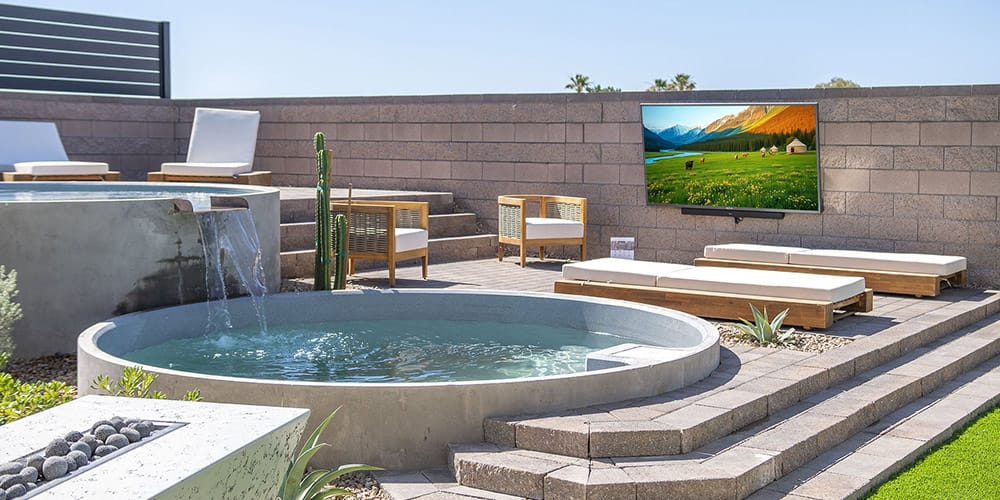
The price difference between an outdoor TV and an indoor TV might seem like the obvious place to cut costs. But housing material is often what separates a TV that looks good at unboxing from one that still looks and performs well three or four years in. The real difference in lifespan is often not caused by a single rainstorm or one sunny day. It comes from years of sunlight and temperature changes slowly affecting body seams and weakening the original protection. The value of a full aluminum alloy body is that it gives IP protection and wide-temperature operation a stronger structural foundation.
A scratch-resistant surface also improves everyday use and maintenance. Installation, cleaning, windblown sand, and regular outdoor contact can all leave marks on the body. A more scratch-resistant finish helps reduce visible wear and keeps the housing looking cleaner and more intact over years of outdoor use.
Real Durability: Understanding the 5-Year Cost
How long an outdoor TV actually lasts isn't determined by any single spec — it's the combination of brightness, IP rating, temperature range, and housing construction all working together.
Every Sylvox outdoor TV spec serves a specific role:
- 1,000–5,000 nits of high brightness: Keeps the screen visible outdoors during the day.
- IP56 weatherproofing: Guards against rain, dust, and moisture around the clock.
- Wide operating range from -22°F to 122°F: Covers year-round seasonal conditions in most U.S. climates.
- Full alloy metal housing: Supports heat dissipation, maintains structural stability, and keeps the sealing effective long-term.
If any one of these areas is weak, the overall lifespan can be affected.
For example:
- If brightness is high but heat dissipation is poor, the backlight and mainboard may age faster.
- If the housing is water-resistant but easily deforms under temperature changes, the IP protection may not last.
- If the material is durable but the brightness is not enough, the actual viewing experience will still fall short.
From a long-term cost perspective, putting a high-brightness indoor TV outside might look like a budget move at first glance. But once you factor in a patio cover, outdoor enclosure, and the cost of replacing the TV after a few years, the final cost may not be lower at all. The value of a professional outdoor TV is that brightness, weatherproofing, heat dissipation, wide-temperature operation, and body structure are all designed for outdoor use from the beginning. This reduces the need for extra protection, repeated maintenance, and early replacement.
The table below compares a higher-brightness indoor TV used outdoors with a mid-range Sylvox outdoor TV to make the the five-year cost difference easier to see.
| Setup | TV Cost | Extra Protection Needed | Typical Outdoor Lifespan | Estimated 5-Year Cost |
|---|---|---|---|---|
55" 1,000-nit peak-brightness indoor TV used outside | $500 | $500–$1,500 patio cover or full shelter | About 1–2 years; typically 3–5 replacements over 5 years | $2,000–$4,000 |
$1,599 | None required | About 5–7 years; typically 1 TV over 5 years | $1,599 |
The cost comparison is one part of the picture. The experience gap is the other. An added cover or shelter can reduce direct exposure to rain and sunlight, but it does not actually turn an indoor TV into an outdoor TV. The screen may still be hard to see in bright light. Heat buildup, moisture, dust intrusion, and temperature changes remain long-term risks.
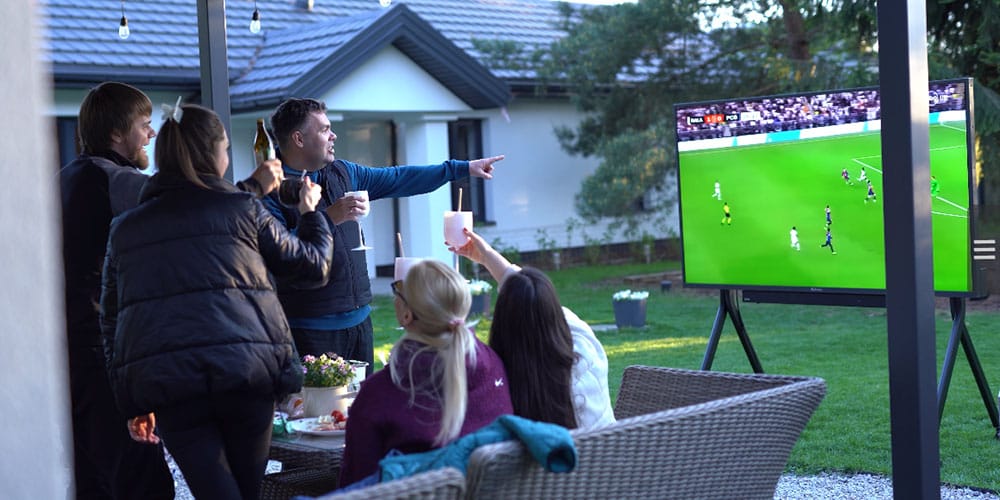
By contrast, a Sylvox Outdoor TV is designed for outdoor environments from the start. Brightness, water and dust protection, wide-temperature operation, metal housing, and heat dissipation are already built into the TV itself. From a long-term investment perspective, the value of an outdoor TV is not only that you buy fewer TVs. It also means less extra protection, less worry about weather, fewer replacements, and a more stable viewing experience.
These specs do not only decide how the TV feels when you first unbox it. They decide whether it can still stay clear, stable, and reliable in year three and year five.
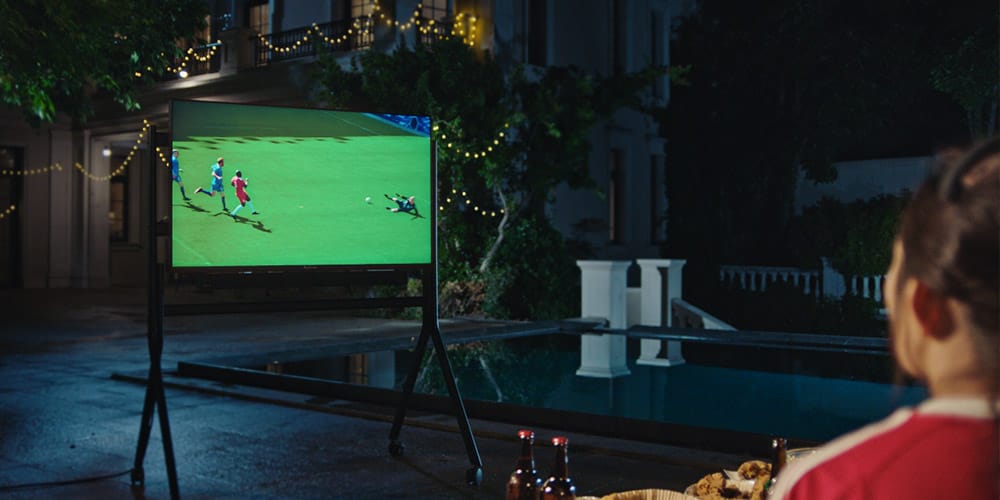
How to Choose: Three Steps to the Right Outdoor TV
You don't need to study every technical detail in depth to make a good decision. Three simple steps get you most of the way there.
Step 1: Check the brightness of the installation area. For shaded patios, covered terraces, pergolas, and other lower-light outdoor spaces, start with a Partial Sun series. For poolside areas, open backyards, rooftop terraces, and other bright outdoor spaces, start with a Full Sun series.
Step 2: Check how exposed the TV will be. If the TV will face rain, dust, humidity, salt air, or temperature changes for long periods, make sure it has IP56 protection, a wide operating temperature range, and a metal body.
Step 3: Match the TV to how you use the space. For everyday streaming, news, and family movie nights, choose an outdoor TV series that matches your lighting environment. If you want richer color and better contrast on top of that, look at the QLED versions within the relevant Sylvox series. For sports, gaming, or a more immersive outdoor cinema setup, the Gaming and Cinema Series both offer 120Hz refresh rates for smoother motion. The Cinema & Cinema Pro Series also add Helio QLED picture quality, which suits anyone who cares about color depth and cinematic feel outdoors.
Still unsure which outdoor TV is right for your space? The Outdoor TV Buying Guide walks through each decision in more detail, or you can reach out to the Shop Assistant for a more personalized recommendation.


Leave a comment