



Watching TV outside can be one of the easiest ways to make a patio, poolside area, or backyard feel more inviting. But outdoor viewing brings a few challenges that are easy to underestimate at first: sunlight, glare, heat, moisture, dust, and long-term wear. Before choosing the "cheaper" setup, it helps to look beyond the upfront price and compare how each option performs over time.
Here's what really matters when an indoor TV and a professional outdoor TV are used outside.
Outdoor Picture Quality Compared
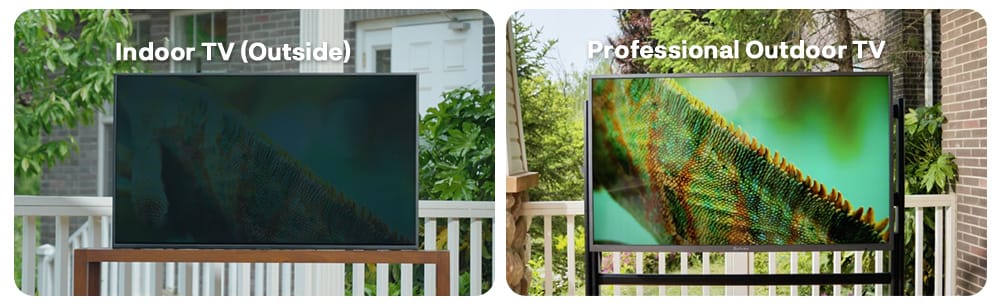
An indoor TV may look fine inside, but sunlight changes the viewing experience immediately. Outdoors, the screen has to fight glare, reflections, and much stronger ambient light.
| Viewing Factor | Indoor TV Outside | Professional Outdoor TV |
|---|---|---|
Sunlight visibility | Washed Out Picture Lower brightness can't overcome strong sunlight. | Clear in Sunlight High brightness keeps the picture clear even in full sun. |
Reflections | Strong Reflections Glare from windows, water, and bright surfaces is distracting. | Better Glare Control Anti-glare screen reduces reflections for a more comfortable view. |
Color performance | Faded Colors Colors can look dull or inconsistent in outdoor light. | Richer, Stable Colors Colors stay consistent and vibrant in different lighting conditions. |
Viewing comfort | Hard to Watch Details get lost, eye strain increases, and long viewing becomes tiring. | Easy on the Eyes Clear details and comfortable viewing, even during long outdoor sessions. |
The key difference is not just "brighter screen." A good outdoor TV is built for real outdoor viewing, where sunlight, pool reflections, and changing sun angles all affect picture quality.
Professional outdoor TVs are also designed around actual light conditions. Open decks, rooftops, or poolside spaces usually need a different brightness level than covered patios and pergolas. That's why Sylvox outdoor TVs are designed for different light conditions:
- Full Sun models for direct sunlight.
- Partial sun models for covered or shaded areas.
For long-term outdoor use, matching the TV to your lighting environment helps keep the picture clear and the viewing experience comfortable. Learn the difference between Full Sun and Partial Sun outdoor TVs to choose the right type of outdoor TV for your outdoor space.
What Makes Outdoor TVs Last Longer
Protection affects long-term durability
Moving an indoor TV outside may work—for a while. But outdoor environments create stress that indoor TVs simply aren't built to handle.
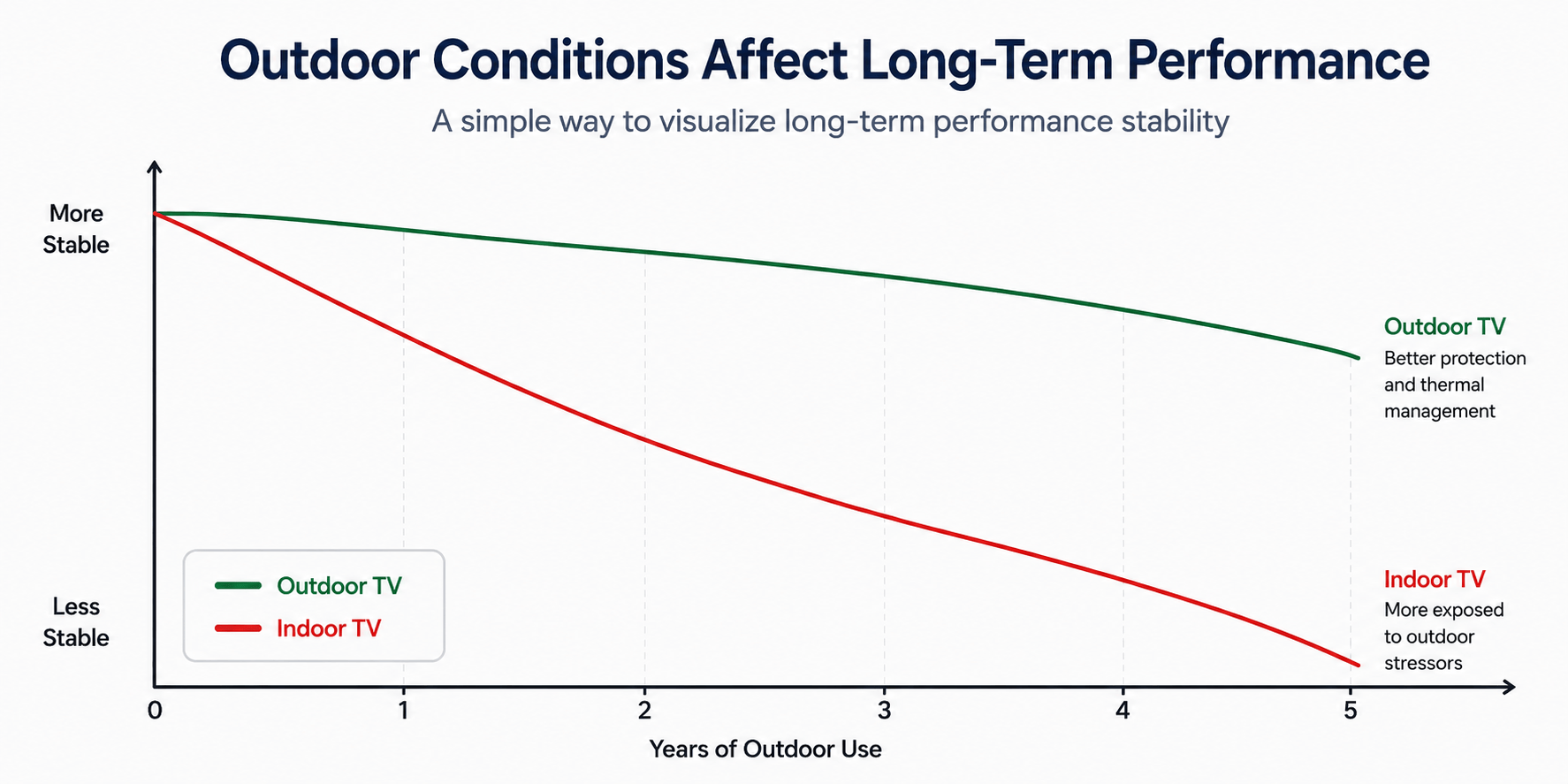
Heat, humidity, rain, and UV exposure don't cause instant failure. Instead, they slowly accelerate aging. Over time, this leads to dimmer screens, color shifts, uneven brightness, or even total failure.
Professionally engineered outdoor TVs are designed to reduce these stresses, helping maintain stable performance for years.
Instead of thinking of outdoor TV durability as one feature, it helps to think of it as stress control. Better sealing, heat management, weather protection, and outdoor-rated materials all work together to slow down the factors that usually cause early performance decline.
Common Signs of Long-Term Outdoor Wear
- Brightness reduction begins
- Uniformity issues appear
- Color shift / dark spots
- Backlight degradation / more failures
- High risk of panel or LED failure
Why Outdoor TVs Age Slower
Outdoor TVs are built with key engineering features that directly reduce the main causes of aging.
| Sealed Enclosures | Thermal Management | Weather Protection | Anti-Corrosion Design |
|---|---|---|---|
Keep moisture and dust out, reducing the risk of corrosion and internal damage. | Better heat dissipation and ventilation prevent heat buildup and reduce thermal stress. | Designed to handle rain, humidity, and temperature changes without performance degradation. | Protective coating helps resist rust and salt air. |
5-Year Cost Comparison
A cheaper setup does not always stay cheaper. When an indoor TV is used outside, the real cost is not just the screen itself. It also includes protective covers, cabinets, possible repairs, early replacements, and the daily hassle of moving or shielding the TV from sun, rain, heat, and humidity.
Over five years, these small costs can quickly add up. A regular indoor TV may need extra protection to survive outdoors, but that protection still may not solve visibility, glare, moisture, or heat-related aging. If the TV fails sooner than expected, the "budget" setup becomes a repeat purchase.
A professional outdoor TV has a higher upfront cost, but it is built to reduce those long-term risks. For homeowners who watch outside often, the better value is not the lowest starting price. It is the setup that stays reliable, visible, and easier to maintain over time.
5-Year Cost of Indoor TV Setups vs Outdoor TVs
| Setup Option | Typical Equipment Cost | Extra Protection Cost | Typical Lifespan Outdoors | Estimated 5-Year Cost |
|---|---|---|---|---|
Indoor TV outside | $300–$500 | $500–$1,500 patio cover or full shelter | 1–2 years | $1,400–$4,000 |
Indoor TV + weather cover | $300–$500 | $40–$120 cover | 2–3 years | $640–$1,620 |
Indoor TV + enclosure cabinet | $300–$500 | $600–$1,500 enclosure | 3–4 years | $1,200–$2,500 |
Outdoor TV | $1,100–$3,000 | none required | 5–7 years | $1,100–$3,000 |
How Sylvox Handles Outdoor Conditions
Sylvox outdoor TVs are built for real outdoor spaces, not just occasional backyard use. From sunny patios to humid poolside areas, the goal is consistent performance across changing outdoor conditions.
Outdoor reliability is not about one single feature. It comes from brightness, weather resistance, temperature stability, anti-glare viewing, and durable housing working together.
That means fewer interruptions, less daily protection work, and a more dependable viewing experience season after season.
| Outdoor Condition | How Sylvox Is Built for It | Why It Matters |
|---|---|---|
Bright Sunlight | Up to 2,000+ nits brightness | Easier daytime viewing |
Rain & Splashes | IP56 water-resistant design | Helps reduce weather exposure and protect internal components |
Dust & Debris | IP56 dust-resistant enclosure | Helps reduce weather exposure and protect internal components |
Humid Air | Anti-Corrosion Metal Housing & Ports | Reduces corrosion risk over time |
Humidity & Condensation | Controlled airflow and sealed enclosure | Helps reduce internal moisture buildup |
Summer Heat | Works up to 122°F | Supports stable outdoor operation |
Winter Cold | Works down to -22°F | Maintains performance in colder seasons |
Which Setup Makes More Sense?
For occasional outdoor viewing, an indoor TV can work as a short-term fix. But for a permanent patio, poolside, or backyard setup, reliability matters more.
A professional outdoor TV is built for clearer daytime viewing, stable performance, and less maintenance season after season.
For regular outdoor living, it is usually the more practical long-term investment.
Next steps:
- Explore TVs for direct sunlight: Shop Full Sun Outdoor TVs
- Find options for covered patios: Shop Partial Sun Outdoor TVs
- Still comparing? Read the Outdoor TV Buying Guide


Leave a comment